

THE FOUNDER’S STORY / PART II
Debugging the self and the birth of Vitalog.
Therapy began as an attempt to understand the past. It became a way of seeing memory, tracking, context and human experience as parts of the same system.
Concept artwork Founder’s Story
THE RESET
The system I needed to understand was myself.
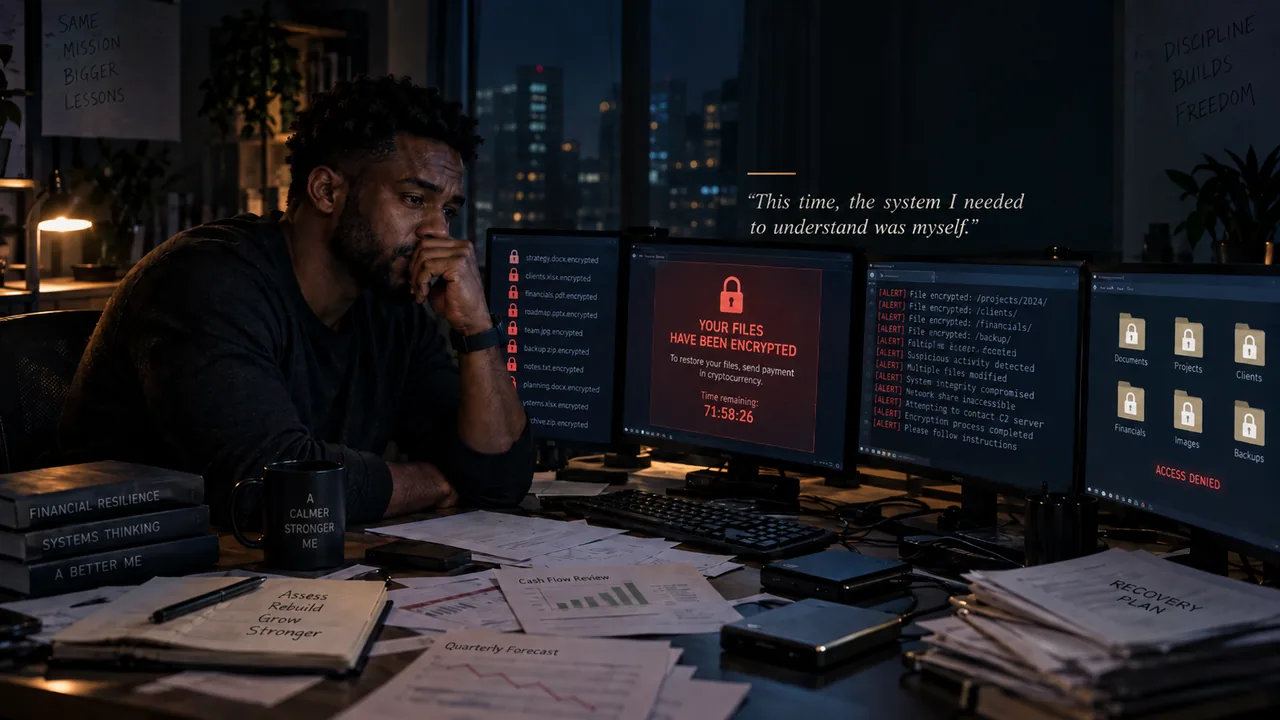
After the ransomware incident, I decided to give psychotherapy a chance. As an entrepreneur, I had become accustomed to solving external problems: broken systems, missing devices, interrupted projects and financial setbacks. But too many things had happened at once, and the combined weight of those experiences had become overwhelming. This time, the system I needed to understand was myself. I wanted clarity. I wanted to understand the forces that had shaped my decisions, fears, ambitions and inventions. So I turned to psychotherapy and meditation.
In the language of The Matrix, I went looking for the Oracle.
SEEKING THE ORACLE
A different kind of diagnosis.
The therapist I found was incredible. Meeting her felt serendipitous. She was thoughtful, perceptive and exceptionally good at her work. Together, we began exploring the unconscious forces that had been influencing my life. To understand those patterns, I began taking inventory of my life.

I wrote two unusual documents. The first was my autobiography. The second was my obituary.
PAST SELF / FUTURE SELF
Current me was the bridge.
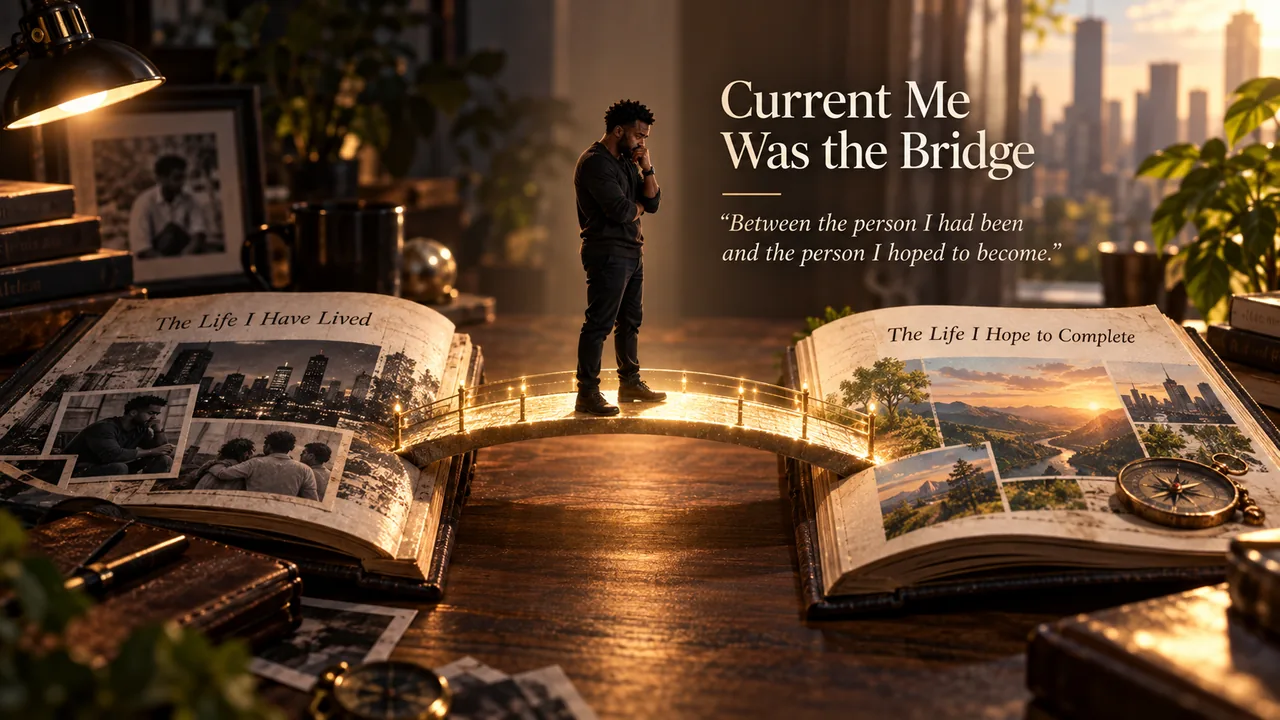
Writing my autobiography helped me appreciate where I had come from, what I had survived, and how the person I had become had been shaped by the past. Writing my obituary forced me to look in the opposite direction. It made me ask what kind of person I wanted to have become by the end of my life. What would I have built? Who would I have helped? What would I have understood? What would I have left behind? My autobiography represented the person I had been. My obituary represented the person I hoped to become.
The present version of me stood between them.
Current me was the bridge. And crossing that bridge would require radical transformation.
TEMET NOSCE
Know thyself.
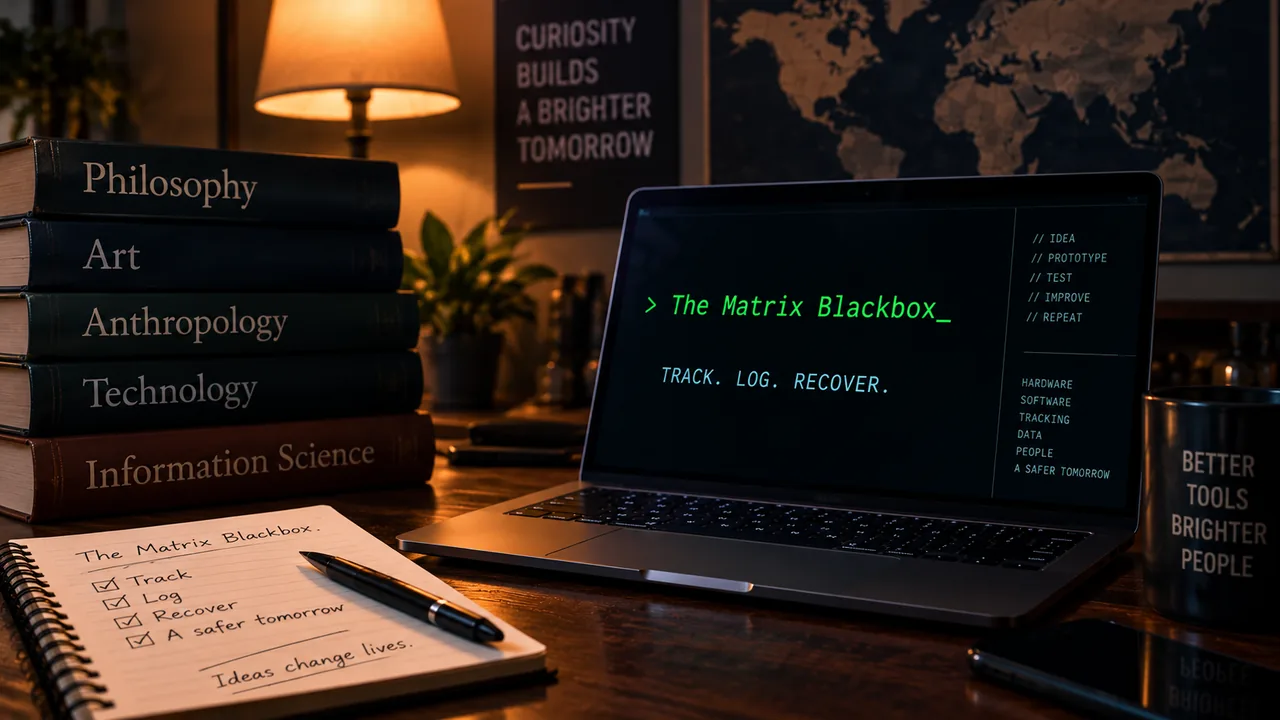
Temet nosce means “know thyself.” The phrase appears in the home of the Oracle in The Matrix. When I first watched the film, its deeper meaning passed me by. Years later, during therapy, I rediscovered it. This time, it made sense. As I wrote my autobiography, unresolved parts of my past began to find their proper place. Events that had once seemed isolated started connecting. Patterns emerged in my decisions, relationships, reactions and behaviour. I began recognising situations in which I had sabotaged myself because of fears created by earlier trauma. I also began to understand how deeply trauma had influenced my inventions.
The Blackbox was one of the clearest examples. It had not simply emerged from a fascination with technology. It had emerged from repeated experiences of loss: the attack on our home, my father’s stolen computer, my stolen laptops, and the fear of losing something important without having any way of finding it again. The invention was solving a technological problem, but the emotional force behind it was personal.
DEBUGGING THE SELF
One process examined software. The other examined the self.
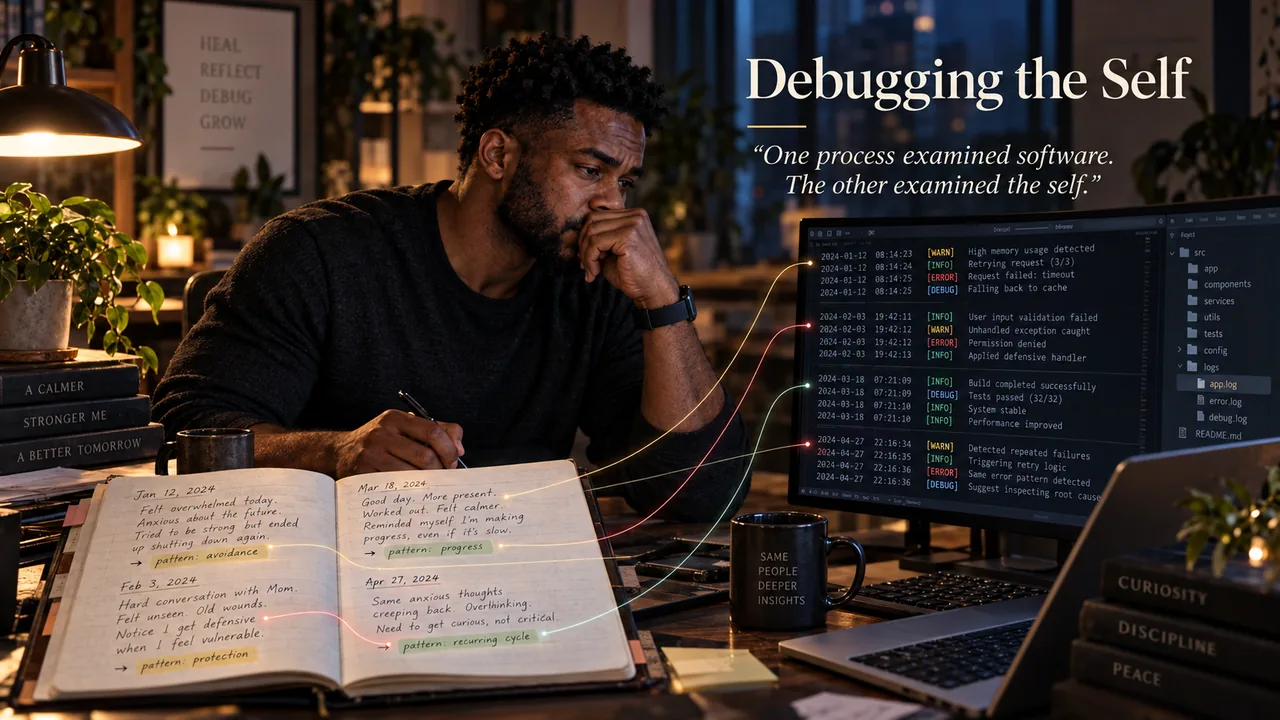
During therapy, I noticed an unexpected connection between psychotherapy, autobiographical writing and computer programming. In therapy, you revisit your experiences. You remember what happened. You record events. You examine the beliefs and behaviours that followed. Then you search for recurring patterns that might explain why certain problems keep appearing. A therapist helps audit those memories, challenge assumptions and identify areas that may require healing or change. Programming works in a surprisingly similar way.
When an application is running, it produces log files. Those logs record what the system has done, when it did it, and where something may have gone wrong. When a programmer needs to debug an application, the logs are often the first place to look. You read through the record. You trace the sequence of events. You look for errors. You identify patterns. Then you try to understand whether the system is performing the function it was designed to perform.
PERSONAL LOGGING
Looking backwards through the logs.
I began keeping a diary of events, ideas, observations and experiences. The more I wrote, the clearer my mind became. Periodically, I would return to old entries and read through them. Almost every time, something new would emerge. Sometimes it was a small piece of wisdom. Sometimes it was a recurring behaviour. Sometimes it was an assumption I had carried for years without ever questioning it. Sometimes it was an idea that had appeared briefly and then disappeared beneath the noise of everyday life. Writing allowed me to preserve those moments long enough to examine them.
It felt as though I was auditing myself in real time. I was debugging my mind, my behaviour, my decisions and my interactions with the world around me. It was like seeing life in raw code. There was no immediate need for judgement. First came observation. Then context. Then interpretation. Only after that could meaningful change begin.
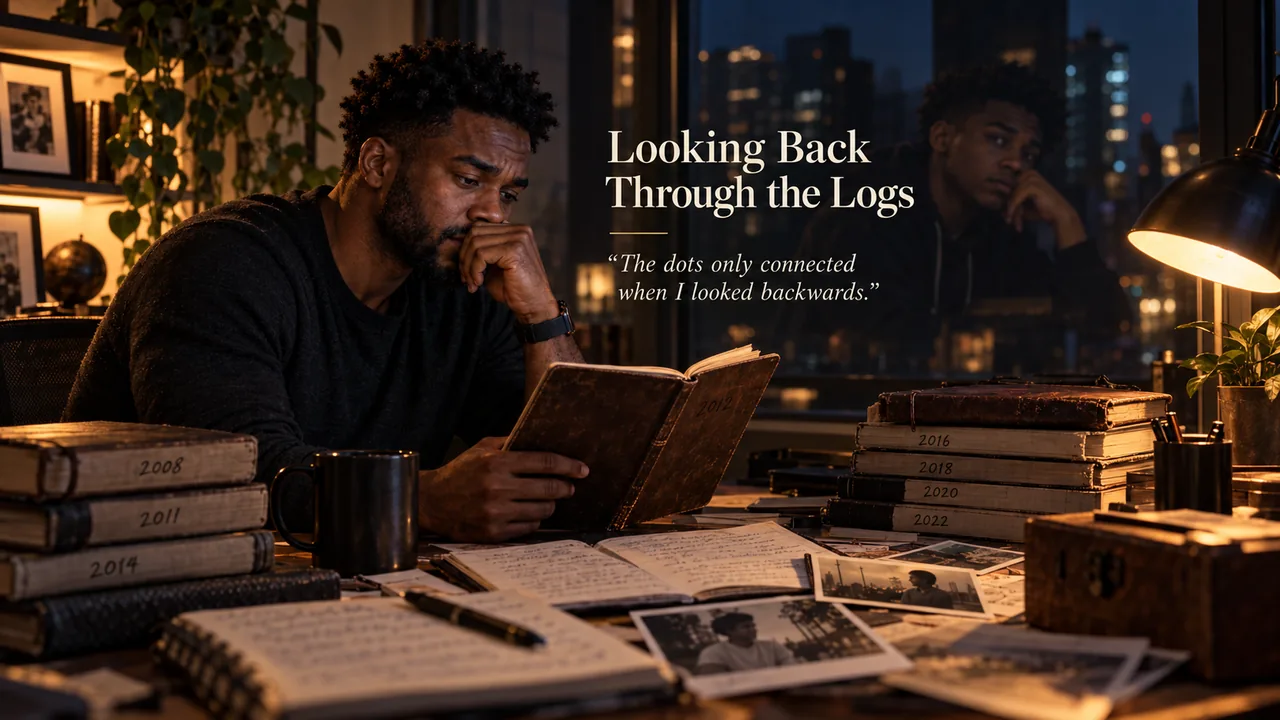
When reading old entries, I could look at earlier versions of myself from the perspective of someone standing in the future. The person who had written the entry did not always understand what was happening. But the person reading it months or years later could sometimes see the pattern.
CONTEXT
Two ideas kept returning: tracking and memory.
Everything that happened between 2007 and 2019 formed what I now call context. What I have shared is heavily condensed. Many other events took place during those years, but the experiences I have described form the essential background behind what would eventually become Vitalog. Without that context, the philosophy behind the project would be difficult to understand. What initially looked like a collection of random misfortunes, coincidences and fortunate discoveries eventually revealed a pattern.
01
Tracking
Observe what is happening, where it is happening, and how it changes over time.
02
Memory
Preserve observations so they retain continuity and can later be understood in context.
The experience of Richard’s father gave those words an even deeper meaning. After his stroke and the onset of dementia, he would sometimes become lost and forget where he was. He also struggled to remember familiar names and relationships. Watching someone who had once known his children intimately struggle to access those memories changed the way I thought about identity. Memory is not the whole of a person, but it carries much of the context through which a person understands themselves and the world around them.
Our memories connect us to our families. They connect us to our experiences. They connect us to our decisions, responsibilities, possessions, relationships and sense of identity. When memory and context become difficult to access, the way a person relates to themselves and their surroundings can change dramatically.
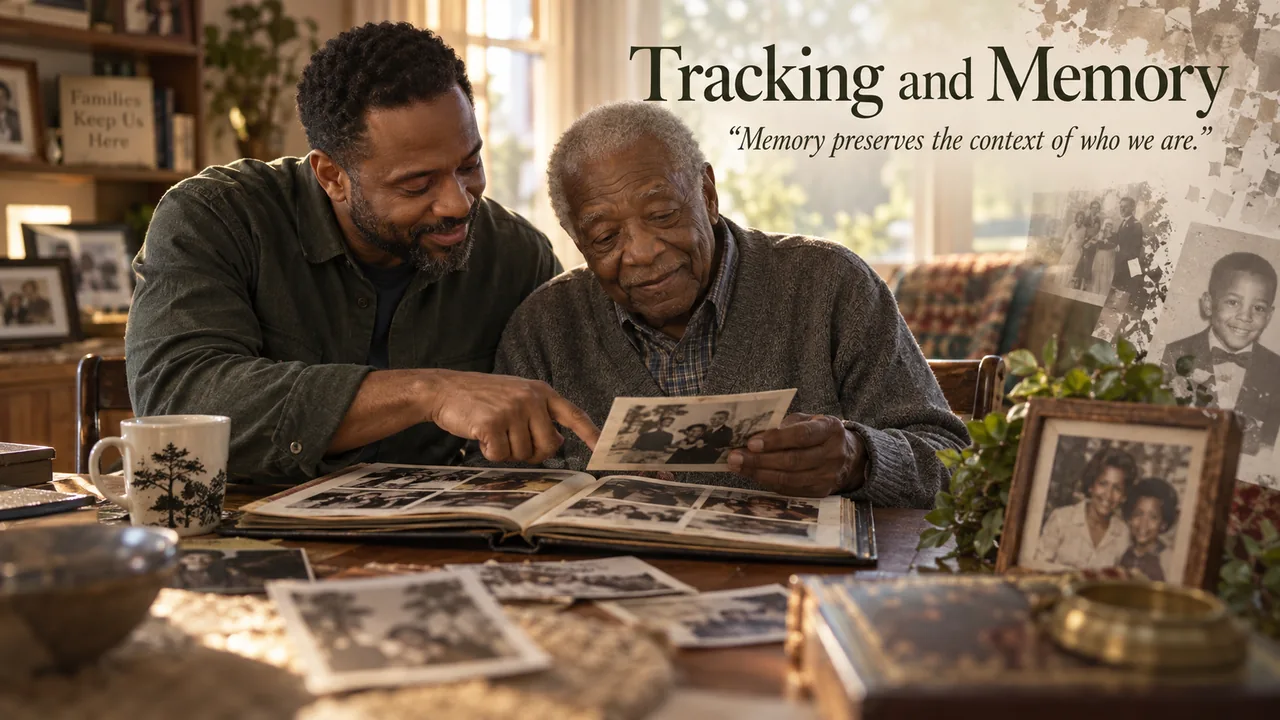
This helped me recognise that tracking and memory were not separate ideas. Tracking helps us observe what is happening. Logging preserves those observations. Memory gives the observations continuity. Context allows us to understand what they mean. When memories are tracked and connected, a story begins to emerge—woven by one of nature’s most fascinating creations: the brain.
THE BIOLOGICAL TRACKING SYSTEM
The brain observes change and compares the present with the past.
The Blackbox had been designed as an Internet of Things tracking system for laptops. But I gradually realised that tracking was much bigger than laptops. Tracking sits at the centre of an astonishing amount of human life. If you want to know where your possessions are, you track them. If you want to understand what is happening to your health, you track changes over time. When crossing a road, your brain tracks the movement and relative speed of vehicles to estimate when it is safe to cross. A farmer tracks rainfall, soil conditions, harvests and seasons. Scientists track weather and climate patterns over long periods. Businesses track income, expenses, profits and losses.
To understand a story, we track its characters, objects and events through time. To identify inconsistencies in a statement, we track the facts. Even catching a ball depends on tracking: the brain observes movement, estimates trajectory and predicts where the ball will be moments later.
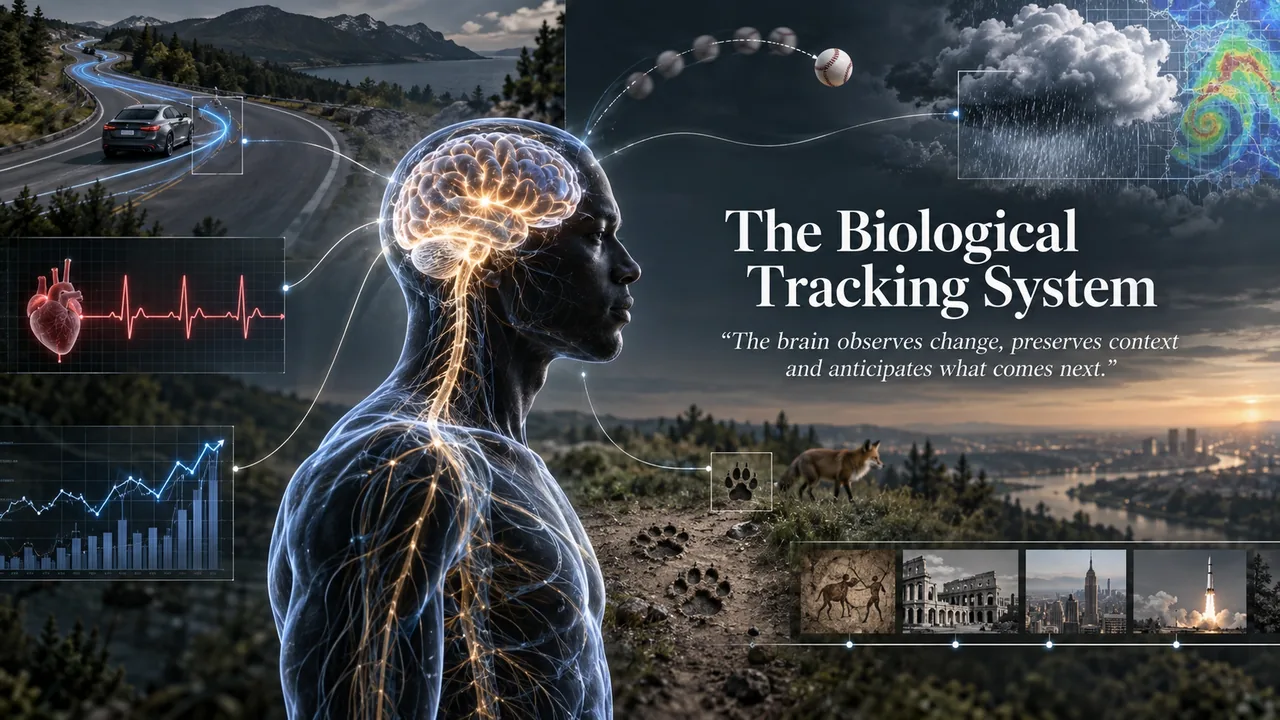
The more I thought about it, the more profound the idea became. In one sense, the human brain can be understood as an extraordinary biological tracking system. It continuously observes change. It preserves context. It detects patterns. It compares the present with the past. And it uses previous information to anticipate what might happen next. But the brain has limits. We forget. We overlook details. We lose records. We misremember events. Information becomes scattered between notebooks, devices, applications, institutions and other people.
That raised a new question: Could technology help us preserve and reconnect the context that human memory sometimes loses?
THE BIRTH OF VITALOG
Vitalog began with questions, not a product.
The questions were about improving the quality of life—and, in the long run, radically extending what technology might help people preserve, understand and act upon. If so much of who we are is carried through memories woven into a coherent story, how could I help people preserve and rediscover those memories? How could I help them locate their loved ones and the things they care about? How could I help people keep track of everything meaningfully connected to their lives? How could a person receive important information early enough to act before a manageable problem became a crisis?
Every time I considered these questions, the answers returned to the same two interrelated concepts: tracking and memory. If I were living with dementia, I would want someone I trusted to know where I was and help me return home safely. If I were of sound mind, I would want to know where my valuable possessions were. I would want to understand what was happening in my business. I would want to preserve the progress of my projects. I would want to recognise significant changes in my health early enough to seek help.
I would want the important events, decisions and relationships in my life to remain connected rather than being scattered across dozens of unrelated systems. Tracking objects, ideas, health indicators, behaviour, responsibilities and other areas of interest could provide tremendous value—not only to an individual, but also to the people who care about them. The purpose would not be to collect information for its own sake. The purpose would be to transform information into useful context. For such a system to work, it would need to maintain detailed and coherent records over time. That required logging.
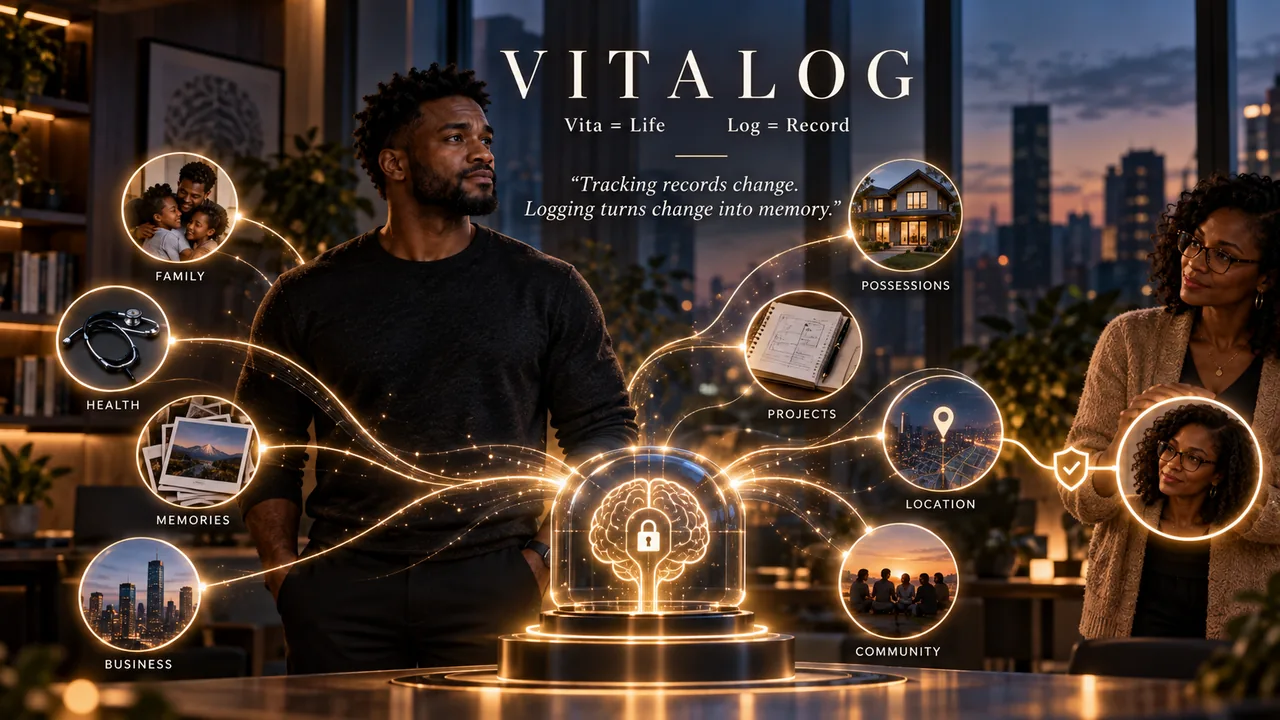
Tracking without logging is temporary observation. Logging turns observations into memory. Memory preserves context. Context allows patterns to become visible. The idea became an ambitious, private lifelogging system that could combine digital records with connected devices and Internet of Things technology.
THE SYSTEM VISION
A private system built around the individual.
I began imagining Vitalog as a cybernetic system that could act as a kind of secondary brain: a private, user-controlled system capable of preserving important information about a person’s life. The vision was to combine software and hardware in ways that could help a person enhance their human experience by managing information across health and wellbeing, family and loved ones, business and finances, projects and ideas, property and possessions, places and movement, personal experiences and memories, and communities and responsibilities.
The system would be built around the individual rather than around a single institution. Everything would be connected relative to the individual. Privacy, control and consent would therefore be fundamental. The broader design could also include carefully controlled digital succession: a person deciding in advance which trusted people should receive access to designated information if they became incapacitated, needed help recovering memories, or could no longer manage the system themselves.
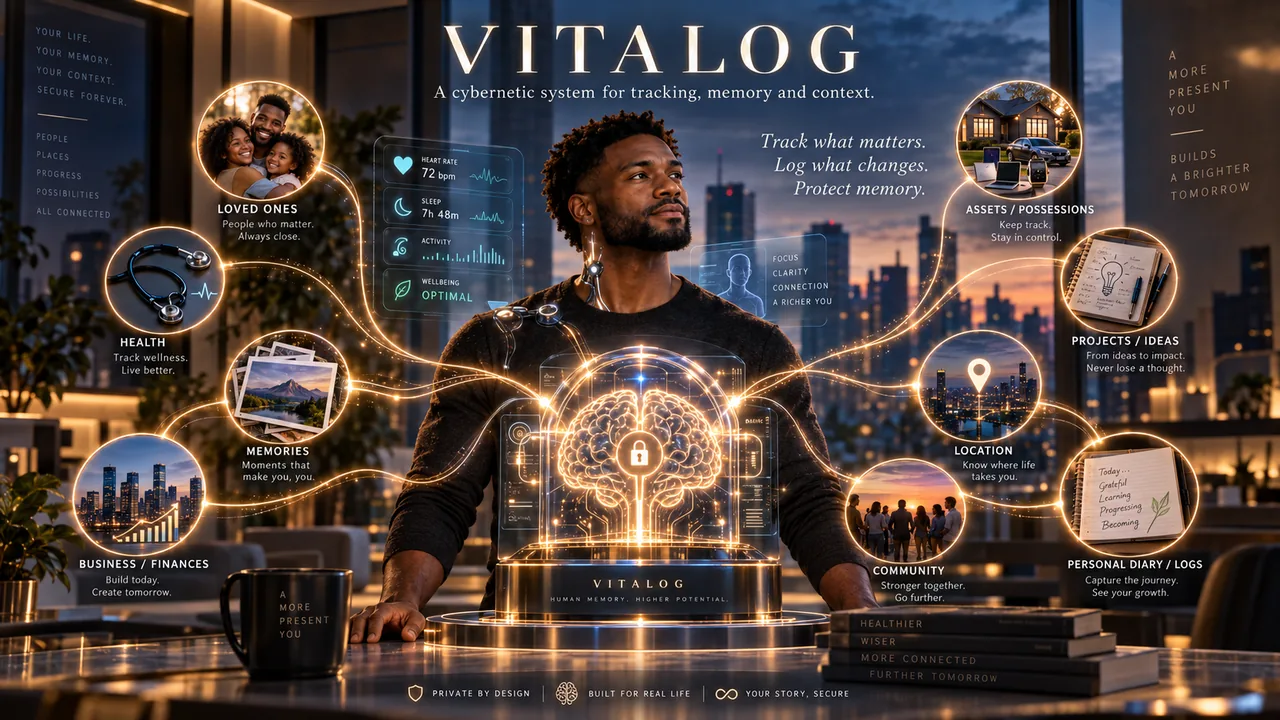
The ambition was not to record every moment simply because technology made it possible. The ambition was to preserve what should not be lost. Vitalog began where many of my earlier inventions had begun: with loss. But the goal had become much larger. It was no longer only about recovering a stolen computer. It was about helping people preserve continuity across time.
To track what matters.
To log what changes.
To protect memory.
And to connect the dots.
DISCUSSION
Join the conversation.
Share a thoughtful take. Comments appear after moderation; email addresses stay private.
Be the first to share your perspective.